Lost River Treatment Center
10025 South 705 Road, Wyandotte
You can pay with: Medicaid · Private insurance plan
The kinds of care
DetoxRehab where you stay overnightOutpatient, PHP and IOPMedication-based treatment (MAT)Treating dual diagnosisRehab for drinkingRehab for drugsPrograms built for one groupSober living homes, transitional housingCovering the cost of rehabCovering the cost of rehab
The rundownSoonerCarePrivate insurance through a planMedicareTRICARENo coverage at allWork out the costSAMHSA list, checked November 16, 2026
Having no insurance doesn't shut you out of treatment. Sliding fees and payment help are out there, and county, state and federal dollars pay for care too. SAMHSA counts 155 programs around here.
Before you call, have two things on the table: the insurance card and the ZIP code. Yours, or the card of the person you're helping. Dialing it reaches a paid referral line, staffed by a partner and not by any program here.
12 of 155 listings, taken from SAMHSA FindTreatment.gov (November 16, 2026). The programs that tell SAMHSA about the most services show up first, then A–Z. Getting on this list is free for every program. A partner has paid for the referral line on this page. How we put them in order.
Where do you even start? Call (405) 536-9895 Dialing it reaches a paid referral line, staffed by a partner and not by any program here.
10025 South 705 Road, Wyandotte
You can pay with: Medicaid · Private insurance plan
230 East 12th Street, Ada
You can pay with: Medicaid · Sliding fee tied to income
608 West Highpoint Drive, Stillwater
You can pay with: Medicaid
118 Main Street, Holdenville
You can pay with: Medicaid · Private insurance plan · Sliding fee tied to income
CARF accredited, going by what it told SAMHSA
304 North Mickey Mantle Boulevard, Commerce
You can pay with: Medicaid
CARF accredited, going by what it told SAMHSA
118 South Scraper Street, Vinita
You can pay with: Medicaid
CARF accredited, going by what it told SAMHSA
619 North Main Street, Muskogee
You can pay with: Medicaid · Medicare · Private insurance plan
138 South Main Street, Afton
You can pay with: Medicaid · Medicare · Private insurance plan
111 South Treaty Road, Miami
You can pay with: Medicaid · Medicare · Private insurance plan
111 Industrial Drive, Checotah
You can pay with: Medicaid · Medicare · Private insurance plan
2250 North Airport Road, Weatherford
You can pay with: Medicaid · Medicare · Private insurance plan
CARF accredited, going by what it told SAMHSA
502 North 14th Street, Perry
You can pay with: Medicaid · Medicare · Private insurance plan
Our facility data is public agency data. None of it is bought from advertisers.
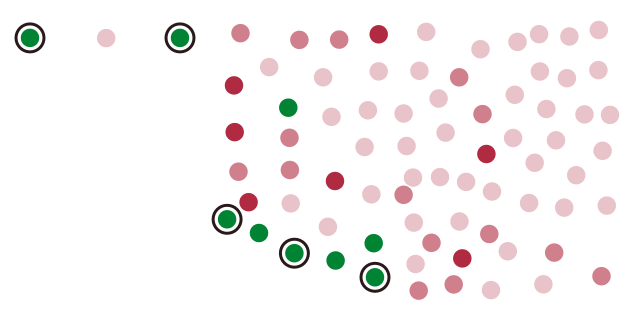
No insurance doesn't shut you out. 155 programs in Oklahoma work with people paying their own way: 44 charge on a sliding scale, 147 get public funding, 101 offer payment help. Most sit around Oklahoma City (21), Tulsa (15) and Norman (5). Counted from the SAMHSA locator, November 16, 2026[1].
What to remember
The Oklahoma Department of Mental Health and Substance Abuse Services (ODMHSAS) is the state's safety net for mental health and substance use treatment, and its core mission is serving Oklahomans who cannot pay. Because funds are limited, it targets them first to people with the most serious needs or in crisis. The state's certified community behavioral health clinics (CCBHCs) must serve everyone regardless of ability to pay, and ODMHSAS adds federal money from the substance use block grant and the State Opioid Response grant. To be connected to local resources, call or text 988.
Even with no insurance, Oklahoma has real options: 44 listed programs price their care on a sliding fee scale, 101 can help with payment, and 147 say they draw county, state or federal money to treat people who can't pay. Also good to know: if federal Substance Use Block Grant dollars fund a program, the line starts with pregnant women and anyone who injects drugs.
146 of these programs take Medicaid as well. If you can get it, Medicaid coverage widens your choices. What I'd do: ask the price first, then check it in the cost calculator. After that, the self-check helps you figure out what level of care to request.
We ran a straight line from each of the 77 county centers in Oklahoma to the closest place we list with low-cost options. In half the counties that's 7.5 miles or less, and in 9 it's more than 30.
| County | Miles to the closest |
|---|---|
| Cimarron County | 57.9 |
| Beaver County | 51.9 |
| Harmon County | 46.8 |
| Jefferson County | 38.9 |
| Tillman County | 38.9 |
| Stephens County | 35.8 |
| Jackson County | 34.9 |
| Dewey County | 34.8 |
Where do you even start?
Call around. Ask who charges sliding fees or takes public funding, and what you'd need to apply.
Dialing it reaches a paid referral line, staffed by a partner and not by any program here.
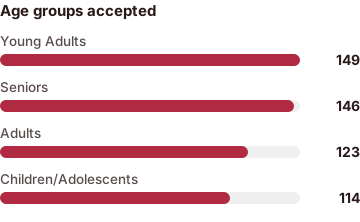
155 listings, counted by who they serve:
Most common here: Young Adults (149 of 155), Seniors (146 of 155) and Adults (123 of 155).
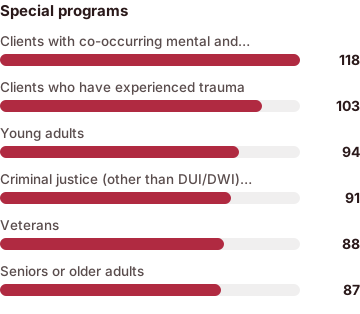
Most common here: People with a substance use disorder plus a mental health condition (118 of 155), Clients who have experienced trauma (103 of 155) and Young adults (94 of 155).
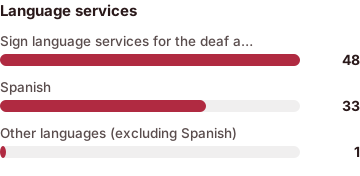
Most common here: Sign language for anyone deaf or hard of hearing (48 of 155), Spanish (33 of 155) and Other languages (excluding Spanish) (1 of 155).
Each program answered this itself: the settings they run and the help they offer once you're discharged.
Most common here: Outpatient (140 of 155), Regular outpatient treatment (57 of 155) and Outpatient care with methadone, buprenorphine or naltrexone (34 of 155).

Most common here: Mentoring/peer support (130 of 155), Housing services (94 of 155) and Assistance with obtaining social services (67 of 155).

Most common here: Buprenorphine used in Treatment (35 of 155), Naltrexone used in Treatment (32 of 155) and Methadone used in Treatment (8 of 155).

Most common here: Cognitive behavioral therapy (151 of 155), Telemedicine/telehealth therapy (126 of 155) and Individual psychotherapy (82 of 155).


Where the 155 programs with low-cost options are, city by city
| City | Take it | In all | Share |
|---|---|---|---|
| Oklahoma City | 21 | 27 | 78% |
| Tulsa | 15 | 18 | 83% |
| Norman | 5 | 6 | 83% |
| Ada | 4 | 4 | 100% |
| Tahlequah | 4 | 4 | 100% |
| Enid | 3 | 3 | 100% |
| Grove | 3 | 3 | 100% |
| Muskogee | 3 | 5 | 60% |
| Sallisaw | 3 | 3 | 100% |
| Shawnee | 3 | 3 | 100% |
| Stilwell | 3 | 3 | 100% |
| Ardmore | 2 | 3 | 67% |
Do they take anything else?
Plenty of programs here accept several kinds of payment, which is handy if your coverage changes in the middle of treatment.
139 of the 155 will take cash too, and 44 set the price on a sliding fee scale.
Free, confidential, available 24/7. Dialing it reaches a paid referral line, staffed by a partner and not by any program here.
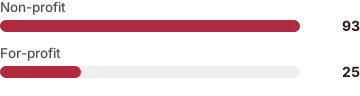
The 155 programs with low-cost options, split by level of care:
Not sure who to call first? Call (405) 536-9895 Dialing it reaches a paid referral line, staffed by a partner and not by any program here.
We took facility counts from the November 16, 2026 SAMHSA snapshot.
The Oklahoma Rehab editorial team checked this page line by line against those sources on November 16, 2026. How we do this.
Getting to know care without insurance
SAMHSA's locator counts 155 out of 180 facilities in Oklahoma (November 16, 2026). Residential care is offered at 22 of them; 12 handle detox. Opioid use disorder medication is given at 43, and outpatient care at 140. 114 of the 155 will take a teenager, and 33 have staff who speak Spanish. Want to ask who among the 155 has an opening? Then try calling the referral line (paid line; a partner answers).
What you pay goes up or down with your income and how big your household is.
Bring something that proves your income, say a pay stub or your tax return, and the program figures your fee from there. In Oklahoma, you'll find 44 programs on a sliding fee scale and 101 that help with payment. Find out what income papers each one wants to see, or try calling the referral line (paid line; a partner answers).
Any program paid with federal Substance Use Block Grant money must take two groups first: pregnant women, and anyone who injects drugs.
Everyone else usually goes in order, and that can mean a wait. Public funding comes up at 147 of the 155. And with 146 of them taking Medicaid, signing up for Medicaid can put more of them within reach.
Oklahoma City has the most, 21; after that come Tulsa (15), Norman (5), Ada (4) and Tahlequah (4).
That works out to 78% of the 27 programs listed in Oklahoma City. All in all, programs with low-cost options turn up in 75 Oklahoma cities. Below, the table shows the cities with the most programs and what share each one has.
Among the 155, 146 take Medicaid, 130 take private insurance, 114 take Medicare, 108 take TRICARE, 139 take cash and 44 use a sliding fee scale. Have a look at Medicaid, private insurance, Medicare, TRICARE, or see what you'd pay using the calculator.
Phone any program above and ask which plans it accepts. You can also call the referral line.
Dialing it reaches a paid referral line, staffed by a partner and not by any program here.
Covering the cost of rehab