

Valley Hope of Tulsa
7718 East 91st Street, Tulsa
How you can pay: Medicaid · Private insurance plan · TRICARE
Joint Commission accredited, going by what it told SAMHSA
The kinds of care
DetoxRehab where you stay overnightOutpatient, PHP and IOPMedication-based treatment (MAT)Treating dual diagnosisRehab for drinkingRehab for drugsPrograms for specific groupsSober living homes, transitional housingCovering the cost of rehabCovering the cost of rehab
The rundownSoonerCarePrivate insurance through a planMedicareTRICARENo coverage at allWork out the costLast looked up on SAMHSA's list: November 16, 2026
There are three medicines for opioid addiction: naltrexone, buprenorphine and methadone. They take the edge off cravings and make an overdose less likely. Doctors treat them as the standard of care. In Oklahoma, SAMHSA counts 60 places that offer this.
Get the ZIP code and the insurance card in front of you before dialing. If you're calling for someone else, use their card. Dialing it reaches a paid referral line, staffed by a partner and not by any program here.
12 of 59 programs (60 SAMHSA listings for 59 programs; when one organization runs several sites, they're on one card), taken from SAMHSA FindTreatment.gov (November 16, 2026). The programs that tell SAMHSA about the most services show up first, then A–Z. Getting on this list is free for every program. A partner has paid for the referral line on this page. Why this order.
What comes first? Call (405) 536-9895 Dialing it reaches a paid referral line, staffed by a partner and not by any program here.
7718 East 91st Street, Tulsa
How you can pay: Medicaid · Private insurance plan · TRICARE
Joint Commission accredited, going by what it told SAMHSA
401 East Broadway Court, Sand Springs
How you can pay: Medicaid · Medicare · Private insurance plan
CARF accredited, going by what it told SAMHSA
117 East Ray Fine Boulevard, Roland
How you can pay: Medicaid · Medicare · Private insurance plan
CARF accredited, going by what it told SAMHSA
610 West Hensley Boulevard, Bartlesville
How you can pay: Medicaid · Medicare
CARF accredited, going by what it told SAMHSA
1613 SE 66th Street, Oklahoma City
How you can pay: Medicaid · Medicare · Private insurance plan
CARF accredited, going by what it told SAMHSA
921 Northeast 13th St., Oklahoma City
How you can pay: payment info missing from SAMHSA
5401 SW 29th, Oklahoma
How you can pay: payment info missing from SAMHSA
1613 SE 66th St, Oklahoma City
How you can pay: payment info missing from SAMHSA
827 East Hubbard Road, Ponca City
How you can pay: payment info missing from SAMHSA
58150 East 66 Road, Miami
How you can pay: payment info missing from SAMHSA
505 N 1st Street, Anadarko
How you can pay: payment info missing from SAMHSA
1307 SW Washington Avenue, Lawton
How you can pay: payment info missing from SAMHSA
Our facility data is public agency data. None of it is bought from advertisers.
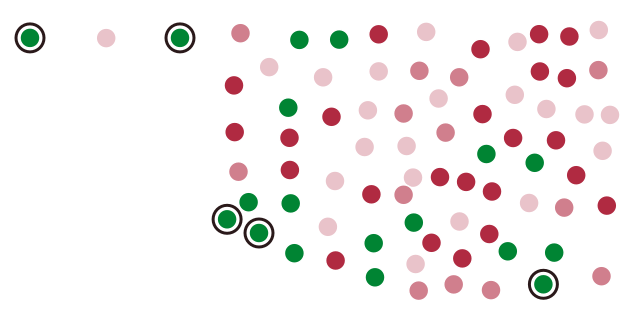
Here in Oklahoma, SAMHSA's list had 60 facilities with medication for opioid use disorder (count from November 16, 2026)[1]; Oklahoma City (13), Tulsa (8), Ada (2), Ardmore (2) and Bartlesville (2) has the biggest share. 78% take Medicaid, and 6 will work with you on a sliding fee scale.
What to remember
Oklahoma has 77 counties. We dropped a pin in the middle of every one and measured, as the crow flies, to the closest listed facility with medication for opioid use disorder. Half those distances are under 20.6 miles, and in 18 counties the nearest one is more than 30 miles off.
| County | Miles to the closest |
|---|---|
| Cimarron County | 57.9 |
| Jackson County | 56.5 |
| Beaver County | 51.9 |
| Harmon County | 51.3 |
| Choctaw County | 44.7 |
| Okfuskee County | 42.3 |
| Kiowa County | 39.6 |
| Jefferson County | 38.9 |
Who picks up the bill for medication for opioid use disorder?
47 of the 60 facilities accept Medicaid and 6 offer a sliding fee scale.
Test a program's quote with the cost calculator.
Free, confidential, available 24/7. Dialing it reaches a paid referral line, staffed by a partner and not by any program here.
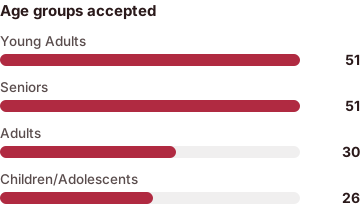
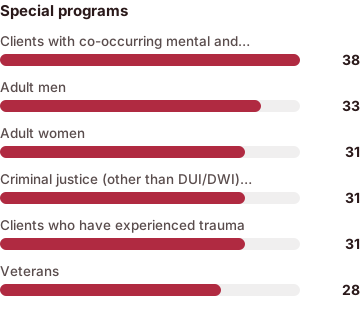
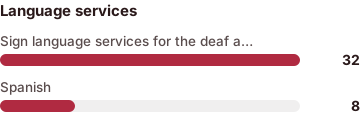
26 of the 60 facilities work with children and teens. Veterans get their own programs at 28, and 8 offer care in Spanish.
Most common here: Young Adults (51 of 60), Seniors (51 of 60) and Adults (30 of 60).
Most common here: People with a substance use disorder plus a mental health condition (38 of 60), Adult men (33 of 60), Adult women (31 of 60), People in the justice system (not for DUI/DWI) (31 of 60) and Clients who have experienced trauma (31 of 60).
Most common here: Sign language for anyone deaf or hard of hearing (32 of 60) and Spanish (8 of 60).
Each program answered this itself: the settings they run and the help they offer once you're discharged.
Most common here: Outpatient (47 of 60), Regular outpatient treatment (43 of 60) and Outpatient care with methadone, buprenorphine or naltrexone (40 of 60).

Most common here: Housing services (47 of 60), Assistance with obtaining social services (45 of 60) and Mentoring/peer support (42 of 60).

Most common here: Buprenorphine used in Treatment (44 of 60), Naltrexone used in Treatment (37 of 60) and Methadone used in Treatment (12 of 60).

Most common here: Substance use disorder counseling (52 of 60), Cognitive behavioral therapy (51 of 60) and Motivational interviewing (51 of 60).

How do you choose one?
SAMHSA names five signs of good treatment. Beside each one is how many Oklahoma medication for opioid use disorder programs told SAMHSA they meet it:
By their own account, 43 of the 60 programs in Oklahoma medication for opioid use disorder carry accreditation from CARF or the Joint Commission. Ask about the state license as well; ODMHSAS issues the licenses.
Medication for alcohol or opioid use (naltrexone, buprenorphine, methadone) is available at 60 of 60. Bring it up.
51 of 60 use therapy with research behind it: motivational interviewing, cognitive behavioral therapy (CBT) or contingency management.
Ask whether they bring family in. 0 of 60 here offer couples or family therapy.
Ask about life after discharge: 52 of 60 stay in touch through peer support or housing help.


Where the 60 facilities offering medication for opioid use disorder are, city by city
| City | Provides this | Every facility |
|---|---|---|
| Oklahoma City | 13 | 27 |
| Tulsa | 8 | 18 |
| Ada | 2 | 4 |
| Ardmore | 2 | 3 |
| Bartlesville | 2 | 2 |
| Anadarko | 1 | 1 |
| Cleveland | 1 | 1 |
| Cushing | 1 | 1 |
| Edmond | 1 | 2 |
| El Reno | 1 | 2 |
| Elk City | 1 | 1 |
| Enid | 1 | 3 |
| Fairview | 1 | 1 |
| Fort Supply | 1 | 1 |
| Grove | 1 | 3 |
You'll find buprenorphine at 44 facilities. Naltrexone is at 37, methadone at 20. You can only get methadone at a federally certified opioid treatment program, which is why most people start buprenorphine at an outpatient office instead.
What comes first?
Oklahoma City has 13 of the 60. You can get in touch with one yourself; the referral line below is the other way.
Dialing it reaches a paid referral line, staffed by a partner and not by any program here.
On November 16, 2026, the Oklahoma Rehab editorial team went through this page again, checking each line against the sources above. How we do this.
Medication for opioid use disorder in Oklahoma: what a local should know
Going by SAMHSA's FindTreatment.gov locator on November 16, 2026, Oklahoma has 180 addiction treatment facilities, and 60 of them offer medication for opioid use disorder.
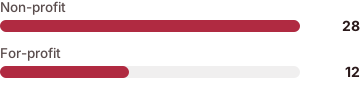
There's at least one in each of 38 cities and 31 counties. Check the table below for the top 15 cities. 28 of the 60 are non-profits; 0 belong to a government agency or the VA.
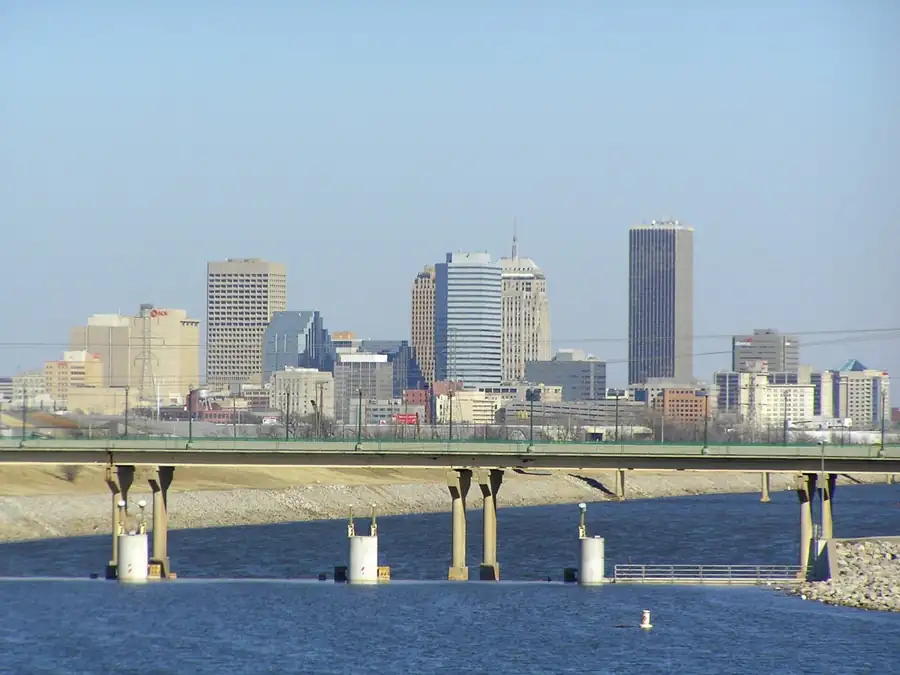
Oklahoma City has the most, with 13, followed by Tulsa (8), Ada (2), Ardmore (2) and Bartlesville (2).
Oklahoma County is the top county, with 15. 33 more cities have one or more, and the directory of all 180 centers covers every one.
For most people, yes. Out of 60 facilities, 47 will bill SoonerCare, 37 bill Medicare, and 44 take private insurance.
Without insurance, 6 of them go by what you earn, and 42 run on public money. Oklahoma City has more programs taking SoonerCare than any other place: 10. Plans differ from one program to the next among the 47. To know which ones a program bills, ask it, or try calling the referral line (a paid line, answered by a partner).
Of the 60, kids and teens can go to 26, veterans have their own programs at 28, and 8 have staff who speak Spanish; 31 will take someone sent there by a court. Teen programs taking SoonerCare: 26 out of 26. Veterans programs taking TRICARE: 19 out of 28; torn between the 60 and can't pick? Ask one of them, or try calling the referral line (a paid line, answered by a partner).
There are three medicines for opioid addiction: naltrexone, buprenorphine and methadone.
They take the edge off cravings and make an overdose less likely. Doctors treat them as the standard of care. Weigh it against detox and inpatient & residential rehab. Out of those 60, 8 offer residential care too, and 47 offer outpatient care. 45 of the 60 will also treat a mental health condition along with the addiction.
Not sure medication for opioid use disorder is the right fit? Call (405) 536-9895 Dialing it reaches a paid referral line, staffed by a partner and not by any program here.
Medication-assisted treatment (MAT) around here