Valley Hope of Cushing
100 South Jones Avenue, Cushing
You can pay with: Private insurance plan · TRICARE
Joint Commission accredited, going by what it told SAMHSA
The kinds of care
DetoxRehab where you stay overnightOutpatient, PHP and IOPMedication-based treatment (MAT)Treating dual diagnosisRehab for drinkingRehab for drugsPrograms built for one groupSober living homes, transitional housingCovering the cost of rehabCovering the cost of rehab
The rundownSoonerCarePrivate insurance through a planMedicareTRICARENo coverage at allWork out the costSAMHSA list, checked November 16, 2026
If your plan is through a job or HealthCare.gov, it covers rehab. Three things set your share: the network, your deductible and prior approval. SAMHSA counts 140 programs around here.
Before you call, have two things on the table: the insurance card and the ZIP code. Yours, or the card of the person you're helping. Dialing it reaches a paid referral line, staffed by a partner and not by any program here.
12 of 140 listings, taken from SAMHSA FindTreatment.gov (November 16, 2026). The programs that tell SAMHSA about the most services show up first, then A–Z. Getting on this list is free for every program. A partner has paid for the referral line on this page. How we put them in order.
Where do you even start? Call (405) 536-9895 Dialing it reaches a paid referral line, staffed by a partner and not by any program here.
100 South Jones Avenue, Cushing
You can pay with: Private insurance plan · TRICARE
Joint Commission accredited, going by what it told SAMHSA
1115 Har-Ber Road, Grove
You can pay with: Medicaid · Medicare · Private insurance plan
CARF accredited, going by what it told SAMHSA
191 North Highway 59, Kansas
You can pay with: Medicaid · Medicare · Private insurance plan
CARF accredited, going by what it told SAMHSA
2007 North Commerce Street, Ardmore
You can pay with: Medicaid · Medicare · Private insurance plan
907 West Caddo Street, Cleveland
You can pay with: Medicaid · Medicare · Private insurance plan
CARF accredited, going by what it told SAMHSA
2412 North Ann Arbor Avenue, Oklahoma City
You can pay with: Medicaid · Private insurance plan
Joint Commission accredited, going by what it told SAMHSA
4851 Integris Parkway, Edmond
You can pay with: Private insurance plan · TRICARE
CARF accredited, going by what it told SAMHSA
411 South Central Avenue, Idabel
You can pay with: Medicaid · Medicare · Private insurance plan
Joint Commission accredited, going by what it told SAMHSA
401 North Church Street, Poteau
You can pay with: Medicaid · Medicare · Private insurance plan
Joint Commission accredited, going by what it told SAMHSA
2727 East Admiral Place, Tulsa
You can pay with: Medicaid · Private insurance plan · TRICARE
CARF accredited, going by what it told SAMHSA
1323 East 71st Street, Tulsa
You can pay with: Medicaid · Medicare · Private insurance plan
CARF accredited, going by what it told SAMHSA
3000 United Founders Boulevard, Oklahoma City
You can pay with: Medicaid · Private insurance plan · Sliding fee tied to income
Our facility data is public agency data. None of it is bought from advertisers.
140 Oklahoma programs take private insurance. What lands on your bill depends on three things: your deductible, your coinsurance, and whether that program is in your plan's network. Most of them are around Oklahoma City (23), Tulsa (15) and Norman (5). Counted from the SAMHSA locator, November 16, 2026[1].
What to remember
If you bought your plan on HealthCare.gov or a state marketplace, the law says it has to cover mental health and substance use disorder treatment as one of the essential health benefits. Most small-employer plans have to cover it too.
On top of that, there's a 2008 federal parity law, which you'll see written as Mental Health Parity and Addiction Equity Act. Under it, a plan that covers addiction treatment can't hold the copays, visit limits and prior authorization rules to a tougher standard than comparable medical care.
Before you agree to anything, take the price they quote and run it through the cost calculator and type in your plan's deductible and coinsurance. 17 residential programs around here accept private insurance. If it's Medicare that covers you, go to Medicare and rehab instead.
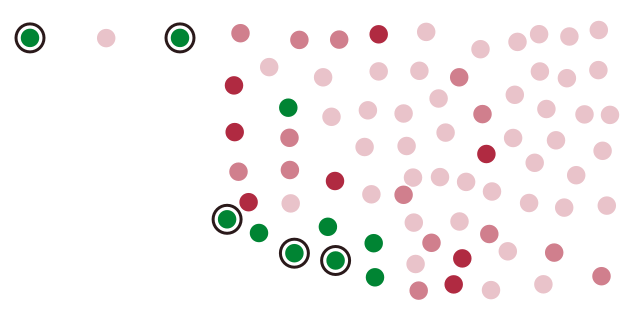
We ran a straight line from each of the 77 county centers in Oklahoma to the closest place we list accepting private insurance. In half the counties that's 8.7 miles or less, and in 10 it's more than 30.
| County | Miles to the closest |
|---|---|
| Cotton County | 58.1 |
| Cimarron County | 57.9 |
| Beaver County | 51.9 |
| Harmon County | 46.8 |
| Tillman County | 46.2 |
| Comanche County | 40.5 |
| Jefferson County | 40.2 |
| Stephens County | 39.8 |
Where do you even start?
Have every program you call check your benefits with your plan.
Dialing it reaches a paid referral line, staffed by a partner and not by any program here.
140 listings, counted by who they serve:
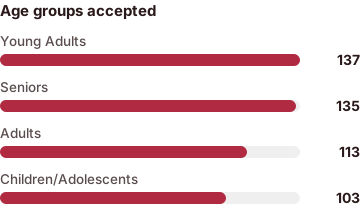
Most common here: Young Adults (137 of 140), Seniors (135 of 140) and Adults (113 of 140).
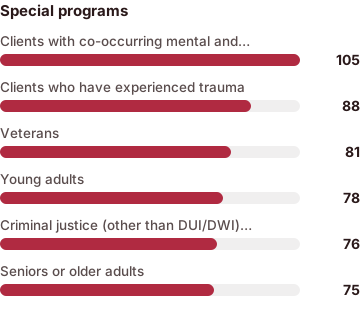
Most common here: People with a substance use disorder plus a mental health condition (105 of 140), Clients who have experienced trauma (88 of 140) and Veterans (81 of 140).
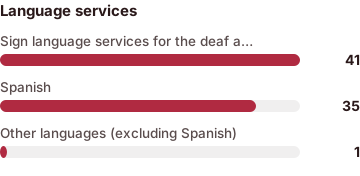
Most common here: Sign language for anyone deaf or hard of hearing (41 of 140), Spanish (35 of 140) and Other languages (excluding Spanish) (1 of 140).
Each program answered this itself: the settings they run and the help they offer once you're discharged.
Most common here: Outpatient (131 of 140), Regular outpatient treatment (51 of 140) and Outpatient care with methadone, buprenorphine or naltrexone (36 of 140).

Most common here: Mentoring/peer support (121 of 140), Housing services (83 of 140) and Assistance with obtaining social services (53 of 140).

Most common here: Buprenorphine used in Treatment (39 of 140), Naltrexone used in Treatment (35 of 140) and Methadone used in Treatment (8 of 140).

Most common here: Cognitive behavioral therapy (135 of 140), Telemedicine/telehealth therapy (117 of 140) and Individual psychotherapy (79 of 140).


Where the 140 programs accepting private insurance are, city by city
| City | Take it | In all | Share |
|---|---|---|---|
| Oklahoma City | 23 | 27 | 85% |
| Tulsa | 15 | 18 | 83% |
| Norman | 5 | 6 | 83% |
| Tahlequah | 4 | 4 | 100% |
| Enid | 3 | 3 | 100% |
| Mcalester | 3 | 3 | 100% |
| Sallisaw | 3 | 3 | 100% |
| Shawnee | 3 | 3 | 100% |
| Stilwell | 3 | 3 | 100% |
| Ada | 2 | 4 | 50% |
| Checotah | 2 | 2 | 100% |
| Durant | 2 | 2 | 100% |
Do they take anything else?
Plenty of programs here accept several kinds of payment, which is handy if your coverage changes in the middle of treatment.
132 of the 140 will take cash too, and 39 set the price on a sliding fee scale.
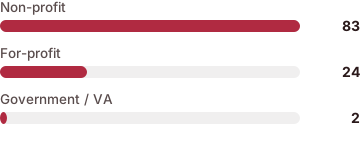
Free, confidential, available 24/7. Dialing it reaches a paid referral line, staffed by a partner and not by any program here.
The 140 programs accepting private insurance, split by level of care:
Not sure who to call first? Call (405) 536-9895 Dialing it reaches a paid referral line, staffed by a partner and not by any program here.
We took facility counts from the November 16, 2026 SAMHSA snapshot.
The Oklahoma Rehab editorial team checked this page line by line against those sources on November 16, 2026. How we do this.
Getting to know private insurance
SAMHSA's locator counts 140 out of 180 facilities in Oklahoma (November 16, 2026). Residential care is offered at 17 of them; 12 handle detox. Opioid use disorder medication is given at 44, and outpatient care at 131. 103 of the 140 will take a teenager, and 35 have staff who speak Spanish. Want to ask who among the 140 has an opening? Then try calling the referral line (paid line; a partner answers).
Most of the time, as long as the program is in network or approved and the stay counts as medically necessary by your plan's own criteria.
Your deductible and coinsurance are still yours to pay, and most plans want prior authorization before day one. You can use private insurance at 140 programs. Residential care is offered at 17 of them, and Medicaid is also taken at 130. Check with each one that it's in your plan's network, or try calling the referral line (paid line; a partner answers).
Somebody at the program calls your insurer and finds out what your plan will put toward the care you need: the deductible, the coinsurance, whether days are limited, and the authorization rules.
Ask them to send you the answer in writing. Say the verification shows a high deductible. Then it helps that 132 of the 140 take cash too and 39 use a sliding fee scale.
Oklahoma City has the most, 23; after that come Tulsa (15), Norman (5) and Tahlequah (4).
That works out to 85% of the 27 programs listed in Oklahoma City. All in all, programs accepting private insurance turn up in 70 Oklahoma cities. Below, the table shows the cities with the most programs and what share each one has.
Among the 140, 130 take Medicaid, 116 take Medicare, 115 take TRICARE, 132 take cash, 39 work on a sliding scale, and 127 say they get public funding. Have a look at Medicaid, Medicare, TRICARE, no insurance, or see what you'd pay using the calculator.
Phone any program above and ask which plans it accepts. You can also call the referral line.
Dialing it reaches a paid referral line, staffed by a partner and not by any program here.
Covering the cost of rehab